
By Made in the Shade Team — 20+ years of expert window-treatment installation
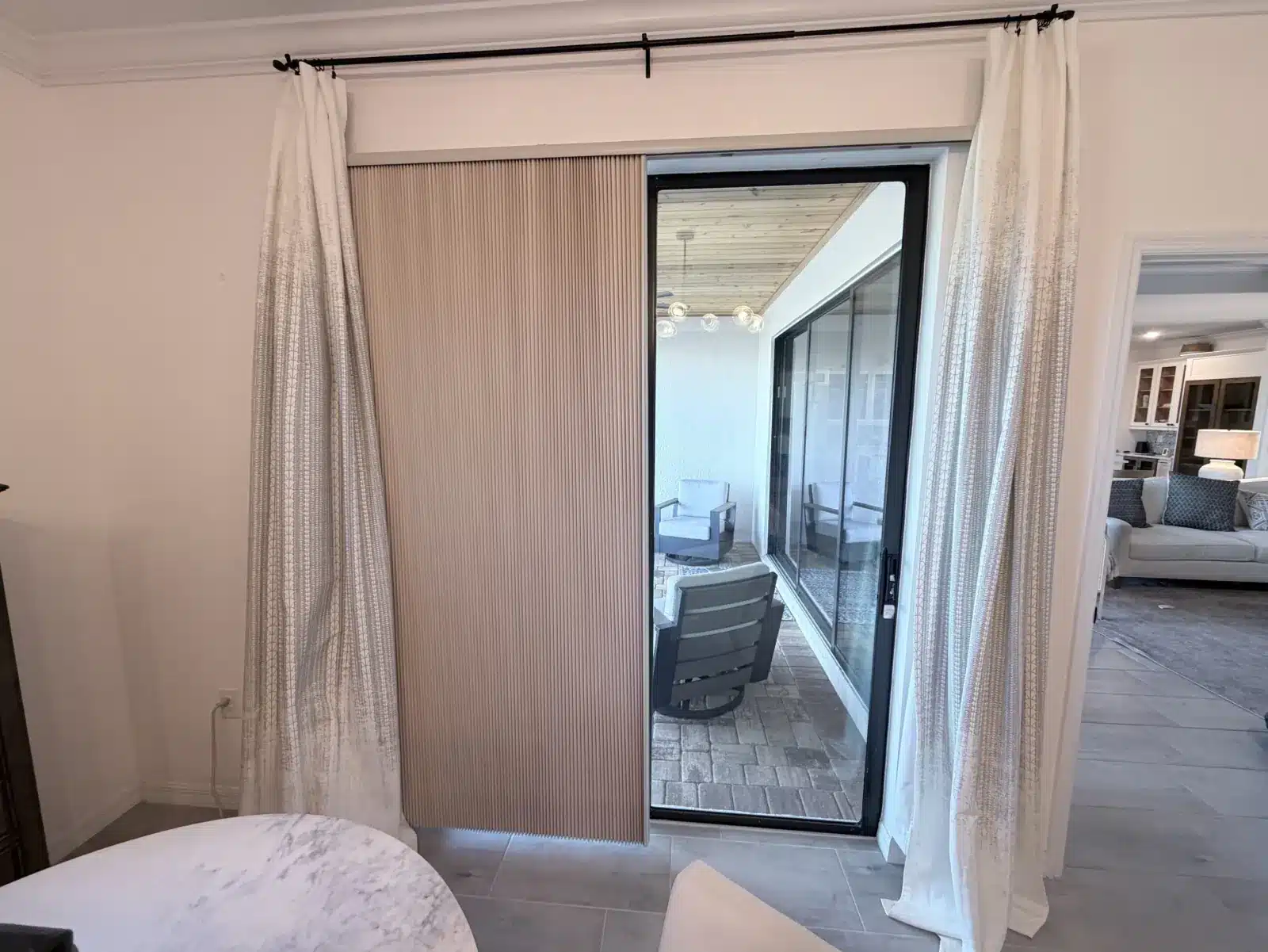
You can put curtains over vertical blinds by mounting a curtain rod above the headrail using wall brackets, headrail-clip brackets, or no-drill hardware. The rod should sit 4-6 inches above the blinds and extend 8-12 inches beyond each side of the window.
Why add curtains over vertical blinds?
Layering curtains over vertical blinds solves both a style problem and a practical one. Vertical blinds do the functional work. Curtains soften their look and bring warmth, texture, and color to a room.
The performance benefits are real too. The U.S. Department of Energy notes that smart management of window coverings can reduce heat gain by up to 77 percent.
Blinds combined with curtains help keep a room warm in winter and cool in summer, since the extra layer traps air and adds insulation. If you have vertical blinds covering a sliding patio door, adding curtains can dramatically cut the drafts that sneak through slat gaps on cold mornings.
What hardware do you need to put curtains over vertical blinds?
The right hardware makes or breaks this project. You have three main options, and the best one depends on whether you can drill into your walls.
Specially designed curtain rod brackets clip directly onto the existing vertical blind headrail. They slide over the top of the rail and let you hang a standard curtain rod without making a single hole in the wall. The most popular version is called a NoNo Bracket. Use three of them — two at the ends, one in the middle — and they attach cleanly to the headrail. You will also need a curtain rod that fits the brackets.
If drilling is an option, standard wall-mounted rod brackets give the most secure, polished result. Choose a rod with a diameter of 1-1.5 inches and allow 3-4 inches of wall clearance so the rod clears the blinds.
For renters who want maximum flexibility, a few alternatives work well: a magnetic curtain rod (only on metal door or window frames), adhesive hooks, or a tension rod for curtains hung inside the window frame.
Step-by-step: how to put curtains over vertical blinds
Follow these steps for a clean, professional result whether you drill or go no-drill.
- Measure your window. Start 4 to 6 inches above the top of your vertical blinds for rod placement. This adds visual height and ensures the curtains clear the headrail. Extend your rod 8 to 12 inches beyond each side of the window so the curtains frame the opening without blocking light when open.
- Choose your curtain length. Decide whether you want floor-length for drama, sill-length for practicality, or a puddled look for added luxury. For a patio door, floor-length panels that slide fully to one side work best.
- Install your brackets. If using wall brackets, use a level to mark placement, then drill into studs or wall anchors. If using NoNo-style headrail brackets, slide them onto the existing vertical blind track (remove any plastic valance covering the track first), adjust the bottom piece so it fits tightly against the track, then tighten the screw on top.
- Mount the rod and hang the curtains. Slide the curtains onto the rod and arrange them evenly. If using curtains with grommets or rings, confirm they slide smoothly. Adjust the panels so they hang evenly and complement the vertical blinds underneath.
- Check clearance. Open and close your vertical blinds while the curtains are in place. Nothing should snag. A gap of 3 to 4 inches between the top of the blinds and the rod usually prevents interference.
- Add finishing touches. Stylish tiebacks give a structured look. Ornate finials dress up the rod ends. Layering sheers underneath adds depth and softens the light.
Which curtain style works best over vertical blinds?
Not every curtain type pairs well with vertical blinds. The wrong style can cause snags, bunching, or an awkward look.
| Curtain Style | Works Well? | Notes |
|---|---|---|
| Grommet top | Yes | Slides easily, modern look |
| Rod pocket | Yes | Clean, classic appearance |
| Back tab | Yes | Neat and low-profile |
| Tab top | Caution | Can snag on headrail hardware |
| Ruffled or bulky | No | Gets tangled in slats easily |
| Sheer panels | Yes | Great for layering and diffusing light |
| Thermal/blackout | Yes | Boosts insulation significantly |
Styles that stack back neatly at the sides work best, allowing the blinds to open and close without interference. Avoid bulky or ruffled curtains that may catch in the slats.
For the fabric itself, consider the room’s function. Bedrooms benefit from blackout or thermal-lined panels. Living rooms and sunrooms do well with sheer shades or lightweight linen that filters rather than blocks light.
Frequently asked questions
Can I hang curtains over vertical blinds without drilling? Yes. Adding curtains over vertical blinds in a rental is easier than most homeowners expect. With no-drill curtain rod brackets, tension rods, adhesive hooks, or freestanding rods, you can get the custom look you want without losing your deposit. NoNo-style headrail brackets are the most popular choice for patio door setups.
Will curtains make my room look smaller if I hang them over vertical blinds? Not if you mount them high and wide. Extending the rod and using longer panels actually makes windows look bigger and ceilings feel taller. Hanging the rod close to the ceiling and running it well past the window frame creates a spacious, intentional look.
Do curtains over vertical blinds actually improve energy efficiency? They do, especially with the right fabric. Drapes that sit snug against the wall and block vertical airflow can cut heat loss by up to 25%. Pairing thermal-lined curtains with your existing vertical blinds gives you two layers of protection against both heat gain in summer and heat loss in winter.
Can I put curtains over vertical blinds on a sliding patio door? Yes. Choose curtain panels that slide fully to one side and use holdbacks or tiebacks to keep them clear when the door is in use. Make sure the rod extends far enough past the door frame so the panels clear the opening completely.
What if my vertical blind headrail sticks out from the wall? Choose brackets with a projection slightly deeper than your blinds — typically 3 to 5 inches. That extra depth solves the clearance problem cleanly, with no interference between the rod and the headrail.
The bottom line
Knowing how to put curtains over vertical blinds opens up a quick, affordable way to refresh a room without replacing your existing window treatments. The core steps are simple: measure carefully, pick the right mounting hardware (wall brackets or no-drill headrail clips), hang your rod 4-6 inches above the headrail, and choose a curtain style that slides cleanly without snagging.
Done right, the combination is genuinely functional. You get the light control of the vertical blinds plus the insulation, softness, and style of fabric panels. If you want to take it a step further, our team at Made in the Shade has spent over 20 years helping homeowners find window treatments that work together rather than against each other.
Our free in-home consultation gives you access to expert advice, real samples, and accurate measurements from people who care about getting it right. Let’s make your windows work for you.
Although we’re based in Venice, Made in the Shade serves clients nationwide. No matter where you live, you can expect personalized consultations and access to our high-quality window treatments. Visit Madeintheshadeblinds.com to locate your nearest showroom.

